
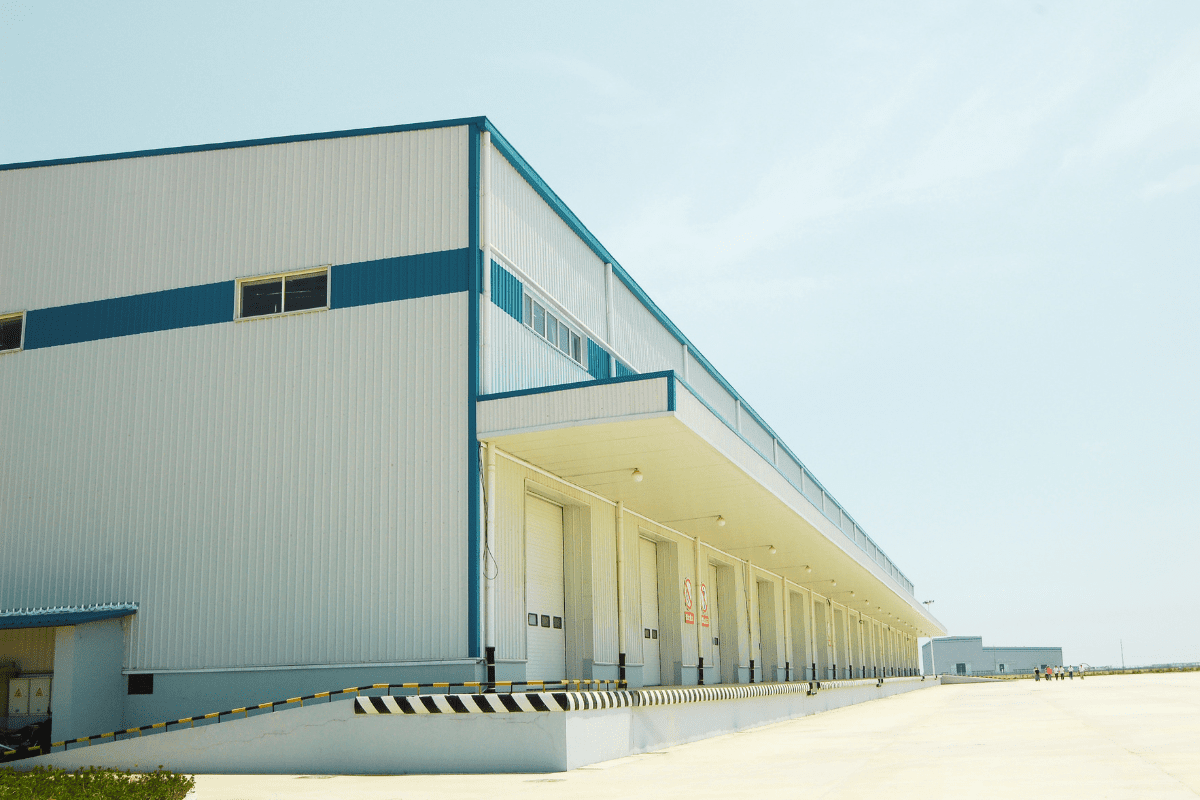
Industrial real estate has become one of the fastest-growing sectors in the property market. With the rise of e-commerce, manufacturing expansion, and distribution needs, demand for warehouses, logistics centers, and industrial facilities continues to increase exponentially across the United States. For investors looking to diversify their portfolios, industrial real estate can offer strong cash flow potential, long-term leases, and opportunities for appreciation. But it’s not without risk (like almost any endeavor), so you need to be sure the benefits outweigh the risks.
What Qualifies as Industrial Real Estate?
Industrial real estate refers to any property used for manufacturing, production, storage, distribution, and research operations. Unlike office buildings or retail centers, industrial properties are designed to support business operations involving equipment, inventory, transportation, logistics, etc.
Another identifying factor: many industrial properties are located near highways, railways, airports, or shipping hubs to make transportation and logistics more efficient.
Industrial Real Estate vs Commercial Real Estate: What’s the Difference?
Industrial real estate is actually a category within commercial real estate. Commercial real estate is a broad term that includes several property types used for business purposes, such as:
Office buildings
Retail centers
Multifamily apartment complexes
Hospitality properties
Industrial buildings
The primary difference is how the property is used. Retail and office spaces are customer-facing environments, while industrial properties are focused on operations, storage, production, or distribution.
Industrial properties also tend to have different lease structures and operational needs. For example, many industrial tenants sign longer leases and may require specialized features such as loading docks, high ceilings, reinforced flooring, ramps, bridges, and large parking areas for trucks and equipment.
What Are The Different Types of Industrial Real Estate?
Industrial real estate can vary significantly depending on the tenant’s business operations. Some of the most common property types include:
Warehouses
Warehouses are used primarily for storage and inventory management. These buildings are often large, open spaces with loading docks and shelving systems.
Distribution Centers
Distribution centers are designed for moving goods quickly through supply chains. These facilities are heavily used by e-commerce companies, shipping providers, and logistics businesses.
Manufacturing Facilities
Manufacturing properties are used for producing goods and may contain heavy equipment, assembly lines, and specialized infrastructure.
Flex Spaces
Flex industrial spaces combine office and warehouse functionality in a single property. They are popular among small businesses, contractors, and startups.
Cold Storage Facilities
Cold storage buildings are temperature-controlled facilities designed to store food, pharmaceuticals, or other sensitive products.
Data Centers
Data centers are generally treated as industrial assets within commercial real estate because they house infrastructure (servers, cooling systems, power equipment) and focus on processing/storage rather than customer-facing activity. More and more, however, data centers are being treated as a distinct asset class: digital infrastructure. Still, they remain largely under the umbrella of CRE, and fall within the industrial property niche.
Is Industrial Real Estate A Good Investment?
Industrial real estate can be a great investment. There are several factors that have contributed to the recent growth.
Strong Demand
Online shopping and rapid shipping expectations have increased the need for warehouses and fulfillment centers. Businesses require more industrial space to manage inventory and distribution at the speed with which customers have become accustomed.
Long-Term Leases
Industrial tenants often sign leases lasting five to ten years or longer, which means long-term stable and predictable income for property owners.
Lower Maintenance Costs
Compared to office or retail properties, industrial buildings are often less expensive to maintain. In fact, many tenants are responsible for maintenance, taxes, and insurance under triple-net lease agreements.
Potential Appreciation
As demand for industrial real estate grows, property values may increase over time, especially in high-demand logistics markets. Data center power demand, alone, is expected to double by 2030.
What Are The Risks Associated With Industrial Real Estate?
Like any investment, industrial real estate also comes with potential risks.
Economic Changes
Economic downturns can reduce manufacturing activity, shipping demand and inventory, potentially impacting occupancy rates and the need for extra space.
Tenant Concentration
Some industrial buildings are highly specialized for a single tenant. If that tenant leaves, or defaults finding a replacement may take time and require expensive renovations.
Rising Interest Rates/Refinancing
Rising interest rates can increase borrowing costs, reduce cash flow, and make new acquisitions less affordable. If an investor has a variable-rate loan, monthly payments may increase significantly as rates rise.
Refinancing can also become difficult if property values decline, lending standards tighten, or market conditions change. Investors who rely heavily on short-term financing may face higher costs or limited loan options when it is time to refinance.
Environmental Concerns
Certain industrial properties may face environmental liabilities related to chemicals, waste, or groundwater contamination. Investors should always perform proper environmental due diligence before purchasing in good conscience.
How Do You Find Industrial Real Estate For Sale?
Like any real estate investment opportunity, you’ll need to do the right research and connect with the right people. Start by:
1. Working With A Commercial Real Estate Broker
Partnering with a commercial real estate broker is usually the most efficient way to access industrial properties, especially in very competitive markets. Brokers not only bring market knowledge and valuation insight, but they also maintain relationships with property owners and developers. In many cases, they control access to listings before they are widely marketed, including “pocket listings” that are only shared with qualified buyers.
2. Searching Online Commercial Property Listings
Online marketplaces remain one of the most accessible starting points for identifying available inventory. Loopnet and Crexi, for example, aggregate thousands of commercial listings across asset classes, including industrial warehouses, flex space, and distribution centers. You can filter by location, size, price, and use. Remember that highly desirable properties often receive significant competition, so these tools are best used in combination with other sourcing strategies rather than relied on exclusively.
3. Networking
Connect with someone who’s been there! In industrial real estate, many opportunities are relationship-driven rather than publicly marketed. Networking with local investors, developers, lenders, contractors, and even attorneys can uncover deals before they ever reach listing platforms. These professionals are often among the first to hear about upcoming sales. Building a reputation as a serious, knowledgeable buyer increases the likelihood that you’ll be referred to these opportunities.
4. Monitoring Off-Market Opportunities
A significant portion of commercial real estate transactions actually occur “off-market,” meaning the property is not publicly advertised for sale. These deals may be quietly circulated by brokers, offered directly by owners, or discovered through data platforms (like Reonomy) that track ownership and transaction history. Off-market opportunities can offer huge advantages, including reduced competition, more flexible negotiation terms, and earlier access to deals. However, finding them requires a consistently proactive approach..
Financing Options For Industrial Real Estate
Traditional Commercial Loans
Traditional commercial loans remain the most common financing option for industrial real estate. These loans are usually used to purchase or refinance stabilized properties that already have strong cash flow, like leased warehouses or distribution facilities.
They generally offer competitive interest rates and longer amortization periods, but come with much stricter qualification standards. Lenders will closely evaluate factors such as the borrower’s credit profile, financial statements, and the property’s income performance. As a result, these loans tend to favor experienced investors or lower-risk assets with established tenants.
SBA Loans
SBA loans are government-backed financing programs designed to help small business owners purchase or occupy commercial real estate, including industrial properties. The two most common programs, SBA 7(a) and SBA 504, offer lower down payments, longer repayment terms, and competitive interest rates compared to conventional loans.
These loans are particularly attractive for owner-users, meaning businesses that plan to occupy at least a majority of the property. For example, a company purchasing its own warehouse or manufacturing facility may qualify for SBA financing with as little as 10% down under certain structures.
While SBA loans can improve affordability and preserve working capital, they also involve more documentation, longer approval timelines, and strict eligibility requirements tied to business size, occupancy, and use.
Commercial Mortgage-Backed Securities (CMBS)
CMBS loans, also known as “conduit loans,” are a widely used financing option for larger, income-producing industrial assets. Instead of being held by a single lender, these loans are pooled with others and sold to investors as mortgage-backed securities.
This structure allows lenders to offer features that are appealing to investors, including:
Fixed interest rates
Non-recourse terms (meaning repayment is tied to the property, not the borrower personally)
Higher leverage compared to many bank loans
CMBS financing is typically best suited for stabilized properties with predictable income streams, such as fully leased logistics centers. However, these loans often come with stricter servicing requirements and limited flexibility if the borrower wants to refinance or sell early.
Construction and Bridge Loans
Construction and bridge loans are types of hard money loans. These are short-term financing solutions designed for a quick close so buyers can seize a lucrative opportunity faster than the competition.
Construction loans are used to finance new industrial developments, such as building a warehouse or distribution center from the ground up. Funds are typically disbursed in phases as the project progresses, and payments are often interest-only during construction.
Bridge loans provide temporary capital to “bridge the gap” between acquisition and long-term financing. They are commonly used for value-add properties that need improvements, tenant stabilization, or repositioning before qualifying for permanent financing.
Hard money loans are incomparable when speed is of the essence. They are not considered a long-term financing option, however, so you will need an exit strategy.
REITs (Real Estate Investment Trusts)
While not a loan product in the traditional sense, Real Estate Investment Trusts (REITs) represent another important financing pathway within the industrial sector. REITs pool capital from multiple investors to acquire, develop, or operate income-producing real estate, including large industrial portfolios such as logistics centers or data centers.
REITs can serve as a capital partner or exit strategy. For investors, REITs offer indirect exposure to industrial real estate without the need to purchase or manage properties directly. That can mean greater scale much more quickly.
In today’s market, many large industrial assets, especially institutional-grade warehouses and distribution hubs, are owned or financed by REITs or similar institutional investors, which is indicative of the sector’s strong demand and long-term growth outlook.
Colorado Land Loans And Hard Money Real Estate Loans
Pinetree Financial Partners helps Colorado investors secure financing for commercial and industrial real estate opportunities. If you want to purchase industrial real estate for sale, develope a new warehouse site, or pursuing a time-sensitive investment, our team offers flexible lending solutions designed to move quickly. Contact us to learn more about financing your next industrial real estate investment.