
Economic recoveries are often described with letters: V-shaped, U-shaped, or L-shaped, for example. Each represents how quickly an economy rebounds after a downturn. More recently, the term “k shaped economy” was coined to describe a phenomenon where different groups experience growth and decline at the same time. Some move sharply upward, while others fall behind. Understanding this divide is essential for workers, investors, and policymakers navigating today’s economic landscape.
K Shaped Economy Meaning
A K-shaped economy refers to a recovery where different sectors, industries, or income groups experience dramatically different outcomes after an economic shock. One segment improves rapidly, while another stagnates or declines.
Instead of rising together, the economy splits, creating winners and losers along the same timeline.
The K Shaped Economy
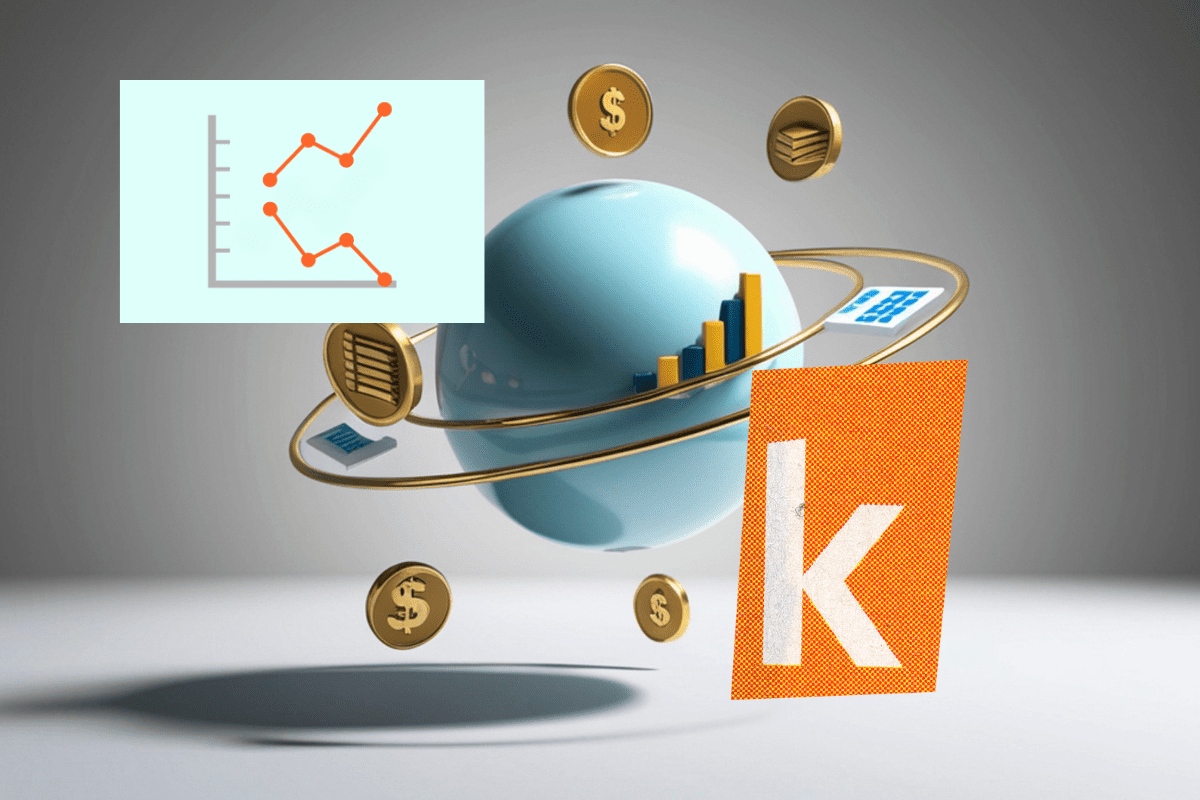
![diagram illustrating k shaped economy on various industries]
Why Is It Called a "K-Shaped" Recovery?
The term comes from the visual shape of the letter K:
The upper diagonal represents individuals and industries that grow, accumulate wealth, and recover quickly
The lower diagonal represents those facing job losses, wage stagnation, or long-term financial stress
This shape captures economic divergence rather than collective recovery.
How Does a K Shaped Economy Differ From Other Economic Recoveries?
Traditional recovery models assume broad participation:
V-shaped: rapid decline followed by rapid rebound
U-shaped: slower recovery after a prolonged bottom
L-shaped: long-term stagnation
A K-shaped recovery is different because growth and decline happen simultaneously, but not evenly. Economic success depends heavily on factors like income level, education, industry, and access to capital.
When Did Economists Start Using the Term "K Shaped Economy"?
While the idea of uneven recoveries has existed for decades, the term gained widespread use during the COVID-19 pandemic. The stark contrast between thriving sectors (like tech and finance) and struggling ones (like hospitality and retail) made the K-shaped framework especially relevant.
What Causes an Economy to Become K Shaped?
A K-shaped economy doesn’t emerge overnight. It develops when economic shocks collide with long-standing structural inequalities, accelerating advantages for some groups while deepening setbacks for others. Several interconnected forces drive this kind of economic divergence:
1. Unequal Exposure to Economic Shocks
Not all workers or businesses are equally vulnerable during downturns. Industries that rely on in-person interaction, hourly wages, or thin profit margins tend to suffer first and recover last. Meanwhile, sectors that can operate remotely or digitally often remain insulated, or even benefit, from disruption.
When an economic shock hits, these differences become magnified rather than evenly distributed.
2. Technological Acceleration and Automation
Technology is one of the most powerful forces behind a K-shaped economy. Automation, artificial intelligence, and digital platforms increase productivity, but not evenly.
High-skill, tech-enabled jobs tend to grow faster and pay more
Routine, manual, or administrative jobs are more likely to be automated or outsourced
Workers and businesses that can leverage technology move up the “K,” while those that cannot are pushed downward.
3. Asset Ownership and Capital Access
Asset ownership is a major divider in a K shaped economy. Individuals and businesses that own stocks, real estate, or equity stakes often benefit from rising asset values during recoveries, especially when interest rates are low or liquidity is high.
By contrast, those who rely primarily on wages and lack access to credit or capital have fewer ways to participate in economic growth.
4. Education and Skills Gaps
Education increasingly determines economic outcomes. Workers with advanced degrees or specialized skills have more flexibility to pivot into growing industries, while those without credentials face limited options.
As the economy evolves, skills, not just effort, become the primary currency of opportunity, which further reinforces economic separation.
5. Geographic Disparities
Where someone lives can heavily influence their economic trajectory. Urban and tech-centered regions often recover faster due to stronger infrastructure, investment inflows, and job diversity.
Rural areas or regions dependent on a single industry may struggle longer, creating regional “Ks” within the broader national economy.
6. Corporate Consolidation and Market Power
Large corporations often have the scale, capital, and supply chain resilience to weather downturns. Smaller businesses, especially local or family-owned operations, may lack those buffers.
As weaker competitors exit the market, dominant firms grow stronger, concentrating wealth, employment power, and pricing influence at the top.
7. Financial Policy and Market Liquidity
Central bank actions, such as low interest rates or asset purchases, can stabilize the economy but also inflate asset prices. This disproportionately benefits investors and asset owners rather than wage earners.
While these policies prevent economic collapse, they can unintentionally deepen inequality if growth isn’t broadly shared.
8. Globalization and Labor Competition
Global supply chains and international labor markets allow companies to optimize costs, but they also expose workers to worldwide competition. High-value, specialized roles tend to remain domestic, while lower-wage jobs face outsourcing pressure.
This dynamic reinforces wage polarization within advanced economies.
9. Health and Social Safety Net Gaps
Access to healthcare, childcare, paid leave, and unemployment benefits plays a critical role in recovery outcomes. Workers without strong safety nets are more likely to exit the workforce entirely after a disruption.
Once displaced, reentry becomes harder, pushing individuals further down the “K.”
10. Compounding Effects Over Time
Perhaps the most defining feature of a K shaped economy is momentum. Gains and losses compound. Those who recover quickly accumulate more resources, opportunities, and flexibility. Those who fall behind face increasing barriers to catching up. Over time, temporary divergence becomes permanent stratification.
Which Industries Tend to Rise and Fall In a K-Shaped Economy?
Industries that tend to rise:
Technology and software
Financial services
E-commerce
Professional services
Healthcare innovation
Industries that tend to struggle:
Hospitality and tourism
Brick-and-mortar retail
Food service
Personal services
Low-wage, in-person labor sectors
The ability to operate digitally or remotely often determines resilience.
How Did the COVID-19 Pandemic Contribute to a K Shaped Economy?
COVID-19 accelerated trends already underway. Workers who could shift to remote work often kept their income and benefited from rising asset prices. Meanwhile, frontline and service workers faced layoffs, health risks, and reduced hours.
Government stimulus helped soften the blow, but it didn’t eliminate the structural divide.
Why Income and Wealth Inequality Widen in a K Shaped Economy
Those who own appreciating assets, like stocks, businesses, real estate, benefit disproportionately in a k shaped economy. Those who rely solely on wages, especially in vulnerable industries, see fewer gains.
Over time, this leads to:
Wealth concentration
Reduced upward mobility
Greater financial insecurity for lower- and middle-income households
What Does a K Shaped Economy Mean for Workers and Job Seekers?
For workers, adaptability matters more than ever in a K shaped economy. Skills tied to growth industries offer security, while roles vulnerable to automation or disruption carry higher risk.
Job seekers may need to:
Reskill or upskill
Consider remote or hybrid roles
Shift industries entirely
How Does a K Shaped Economy Impact Housing, Inflation, and Cost of Living?
Housing markets often surge in K-shaped economies, especially in high-income or remote-work-friendly areas. Meanwhile, inflation hits essentials-food, rent, energy-harder than wages grow for many workers.
This combination squeezes household budgets and deepens economic stress.
What Does a K Shaped Economy Mean for the Middle Class?
The middle class often feels the most pressure. Some households move upward through asset growth and career flexibility, while others slide downward due to rising costs and stagnant wages.
The result is a shrinking and polarized middle class.
How Does a K Shaped Economy Affect Consumer Spending?
Consumer behavior becomes uneven:
Higher-income households spend freely on travel, luxury goods, and investments
Lower-income households focus on necessities and debt management
This imbalance influences business strategy, pricing, and product development.
Can Government Policy Fix a K-Shaped Economy?
Policy can reduce the severity, but not eliminate divergence entirely. Effective strategies include:
Workforce retraining programs
Infrastructure investment
Small business support
Affordable housing initiatives
Access to capital and credit
Long-term solutions require structural change, not short-term stimulus alone.
Is a K Shaped Economy Sustainable in the Long Run?
Sustained inequality can slow economic growth, reduce consumer demand, and increase social instability. While innovation thrives at the top, economies ultimately depend on broad participation to remain healthy.
What Should Investors Do to Adapt to a K Shaped Economy?
1. Focus on Fundamentals, Not Headlines
In a divided economy, market optimism can mask underlying weakness. Investors should prioritize fundamentals such as:
Cash flow stability
Balance sheet strength
Debt service coverage
Long-term demand drivers
Assets supported by real income and usage, not just speculation, tend to hold up better when economic divergence widens.
2. Diversify Across Asset Classes and Income Streams
Diversification matters more in a K shaped economy because sectors don’t rise and fall together. Spreading capital across different asset types can reduce vulnerability to downturns in any single segment.
This may include a mix of:
Real estate and private lending
Equities and fixed-income instruments
Growth-oriented and income-producing assets
Multiple income streams can help offset volatility when one area underperforms.
3. Favor Resilient and Essential Sectors
Certain industries tend to remain stable regardless of broader economic divides. Investors often look toward sectors tied to essential services or long-term structural demand, such as:
Healthcare
Housing and infrastructure
Utilities and energy
Logistics and supply chain services
These sectors are less sensitive to short-term consumer spending shifts and offer greater downside protection.
4. Maintain Liquidity and Flexibility
Liquidity is a form of insurance. Holding accessible capital allows investors to respond quickly to changing conditions, whether that means covering unexpected expenses or seizing opportunities created by market dislocation.
In a K shaped economy, flexibility often separates those who capitalize on volatility from those whose hands are forced.
5. Manage Leverage Carefully
Low interest rates can make leverage attractive, but excessive debt increases vulnerability, especially if revenue or asset values become uneven.
Prudent investors stress-test investments under conservative assumptions and avoid overleveraging during boom periods. You’ll also want to structure debt with manageable terms and buffers. Remember: controlled leverage can enhance returns, but disciplined leverage protects longevity.
6. Pay Attention to Geographic and Demographic Trends
Economic divergence often plays out regionally. Investors who understand population shifts, remote work trends, and local economic drivers can better anticipate which markets are positioned to grow, and which may struggle.
Demographic factors such as aging populations, migration patterns, and workforce availability increasingly influence long-term investment outcomes.
7. Hedge Against Inflation and Cost Pressures
Inflation often affects a K-shaped economy unevenly. Investors may look for assets with built-in inflation protection, such as:
Investments with pricing power
Income streams that adjust over time
Hard assets with replacement cost support
Protecting purchasing power is just as important as generating nominal returns.
8. Avoid Overconcentration in “Winner” Assets
Assets that perform well early in a K shaped recovery can become overcrowded. Chasing momentum increases the risk of overvaluation and correction.
Disciplined investors balance exposure to growth with valuation awareness and downside planning.
9. Take a Long-Term View, Not a Short-Term Reaction
K-shaped economies can persist for years. Investors who constantly react to short-term shifts may erode returns through poor timing or emotional decisions.
A long-term strategy built around goals, risk tolerance, and cash flow needs is more effective than attempting to predict every market move.
10. Work With Experienced Financial and Lending Partners
Perhaps most importantly, investors benefit from guidance rooted in experience. Lending professionals and advisors who have navigated multiple economic cycles understand how to structure investments that withstand uneven recoveries.
Access to smart financing, conservative underwriting, and market insight can significantly reduce risk in uncertain environments.
What Comes After a K Shaped Economy?
Eventually, economies either rebalance through policy, innovation, or social pressure—or inequality deepens further. The path forward depends on decisions made by governments, businesses, and individuals today.
Discuss Your Investment Project With the Experts
30+ Years of Lending Experience in Colorado
Navigating a K-shaped economy requires more than guesswork. Talk with our Colorado-based lending professionals to explore smart financing strategies backed by over 30 years of experience. In uncertain economic times, the right partnership can make all the difference. Contact Pinetree Financial today to discuss your project.