
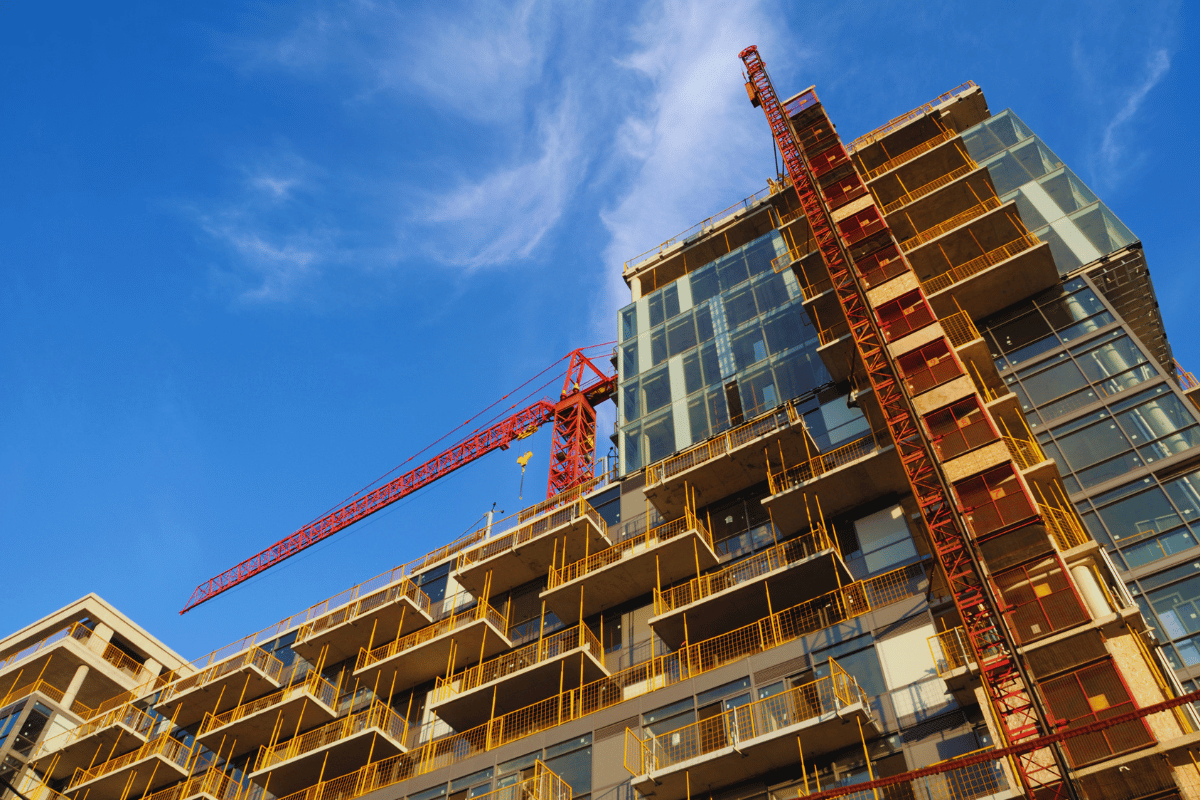
Multifamily real estate has long been one of the most attractive asset classes for investors seeking recurring cash flow, appreciation, and portfolio scalability. New builds are, likewise, a good opportunity, especially in the right location. So what if you combine the two? Can a newly constructed multifamily property be as lucrative as an existing one? As with all real estate endeavors, the answer depends. Under the right circumstances and with the right financing, multifamily construction can absolutely be a good investment.
First: What Is Meant By "Ground-Up" Multifamily Construction?
Ground-up multifamily construction involves purchasing land and developing a new apartment complex, townhome community, duplex, or other multifamily asset from scratch. Instead of acquiring an existing property with tenants in place, the investor oversees the entire development process, including:
- Land acquisition
- Site planning and engineering
- Permitting and zoning approvals
- Construction
- Leasing and stabilization
- Long-term operation or disposition
This strategy offers investors maximum control but also introduces significant complexity, which we will discuss in a bit.
Advantages of Ground-Up Multifamily Construction
Complete Control Over Design and Amenities
One of the biggest advantages of new construction is the ability to build a property specifically for today's renters.
Developers can incorporate:
- Modern floor plans
- Energy-efficient systems
- Smart-home technology
- Community amenities
- Attractive unit finishes
- Flexible common spaces
This allows investors to create a product tailored to local market demand rather than inheriting outdated layouts or deferred maintenance issues from a previous owner.
Lower Maintenance Costs
Presumably, a newly constructed property typically requires fewer repairs and capital expenditures during its initial years, since everything is brand new. This means less maintenance for roofs, HVAC, plumbing, elevators, etc. This cost savings can help offset the initial expense of a new build.
Higher Rental Premiums
Newly built multifamily communities can command higher rent than older properties because tenants are willing to pay for modern amenities, improved energy efficiency, and contemporary finishes.
In competitive markets, the rent premium may significantly increase overall project value because commercial multifamily assets are often valued based on income production.
Potential Tax Benefits
Depending on the jurisdiction and development structure, investors may benefit from depreciation strategies, cost segregation studies, opportunity zone incentives, or local tax abatements designed to encourage new housing development.
Increased Equity Creation
Unlike purchasing a stabilized asset, developers can create value throughout the entire development process. An investor who acquires land, builds units, leases them successfully, and stabilizes occupancy may significantly increase the property's value beyond total project cost if market conditions remain favorable.
Disadvantages of Ground-Up Multifamily Construction
Longer Timelines
Multifamily development projects often require years rather than months. Due diligence in finding the land itself will take time. You'll also be working with contractors who are the mercy of their supply chain, which can be a source of delay. Add in financing, final inspections, and marketing the new residence, and you're in it for the long haul.
Higher Risk
Because it is a much bigger project, ground-up development carries numerous risks, including:
- Cost overruns
- Construction delays
- Labor shortages
- Material price increases
- Interest rate volatility
- Market downturns
- Permitting complications
Even well-planned projects encounter unexpected challenges. This makes financing more complicated as well, since traditional lenders are often unwilling to shoulder the additional risks. We'll talk more about financing options in a moment.
Significant Capital Requirements
Talking of financing, you'll need a hefty sum. Developing a multifamily property generally requires substantially more capital than purchasing an existing property.
Investors often need funds for:
- Land acquisition
- Pre-development expenses
- Entitlements
- Equity contributions
- Construction contingencies
The required cash investment can become a major barrier for newer investors.
No Immediate Cash Flow
Unlike acquiring an occupied apartment building, a ground-up project produces no rental income during development.
Investors must carry financing costs, taxes, insurance, and other expenses until the property is completed and leased.
How Multifamily Construction Projects Are Financed
Financing a ground-up multifamily project typically involves multiple sources of capital.
Developer Equity
Lenders rarely finance 100% of a project's cost. Most require developers to contribute a meaningful equity investment.
Equity demonstrates commitment and helps reduce lender risk.
Bank Construction Loans
Some traditional banks do offer construction financing, but this is only to experienced developers with strong balance sheets.
These loans typically:
- Fund construction through periodic draws
- Require detailed budgets and plans
- Convert into permanent financing upon completion in some cases
- Offer lower rates than private lending
However, underwriting standards can be quite strict.
Private Capital and Equity Partners
Many developers raise funds from outside equity or from private investors, family offices, real estate syndications, or investment funds. This allows them to pursue larger projects while lessening the burden of so much personal capital.
Hard Money Construction Loans
Hard money lenders play an important role in multifamily development financing, particularly when speed and flexibility are critical.
Unlike traditional lenders, hard money lenders often focus heavily on the economics of the project itself. Basically, if the project is feasible and has high value potential, and the borrower has a good exit strategy, he or she can qualify for a hard money loan. Your credit score and experience are not always a factor.
Because they are assuming greater risk, however, hard money construction loans have higher interest rates and require a larger down payment. That being said, they are invaluable when speed is of the essence. Hard money loans can close in less than a week, sometimes in mere days. This can help investors close on a competitive piece of land and get building far sooner than a traditional loan.
Key Metrics Investors Should Analyze
Before breaking ground on a multifamily project, investors should evaluate:
Loan-to-Cost (LTC)
LTC measures the relationship between the loan amount and total project cost. Higher LTC ratios reduce the developer's upfront cash requirement but can increase financing risk.
Cash-to-Close
Cash-to-close includes the equity contribution, loan fees, closing costs, and other expenses required before construction begins. Understanding this figure is essential when evaluating project feasibility.
Cost of Capital
Investors should evaluate total financing costs, including interest, points, fees, and potential extension costs, rather than focusing solely on the interest rate.
Exit Strategy
Every project should have a clearly defined exit plan, whether that involves:
- Long-term ownership
- Refinancing
- Sale upon stabilization
- Portfolio recapitalization
So, Is Ground-Up Multifamily Construction Worth It?
Ground-up multifamily development offers the opportunity to create a modern, highly desirable asset from scratch while potentially generating substantial value and long-term appreciation. However, those rewards come with increased complexity, greater capital requirements, and significantly higher risk.
For experienced investors with adequate capital, strong development teams, and access to flexible financing, ground-up construction can provide exceptional long-term returns. For those seeking immediate income and lower execution risk, acquiring an existing multifamily property may be the better fit.
If you are a real estate developer in Colorado, our hard money loans can help you finance a wide variety of projects, from raw land to commercial properties. Don't miss out on a lucrative opportunity: call or go online today to see how we can help you achieve your investment goals.