
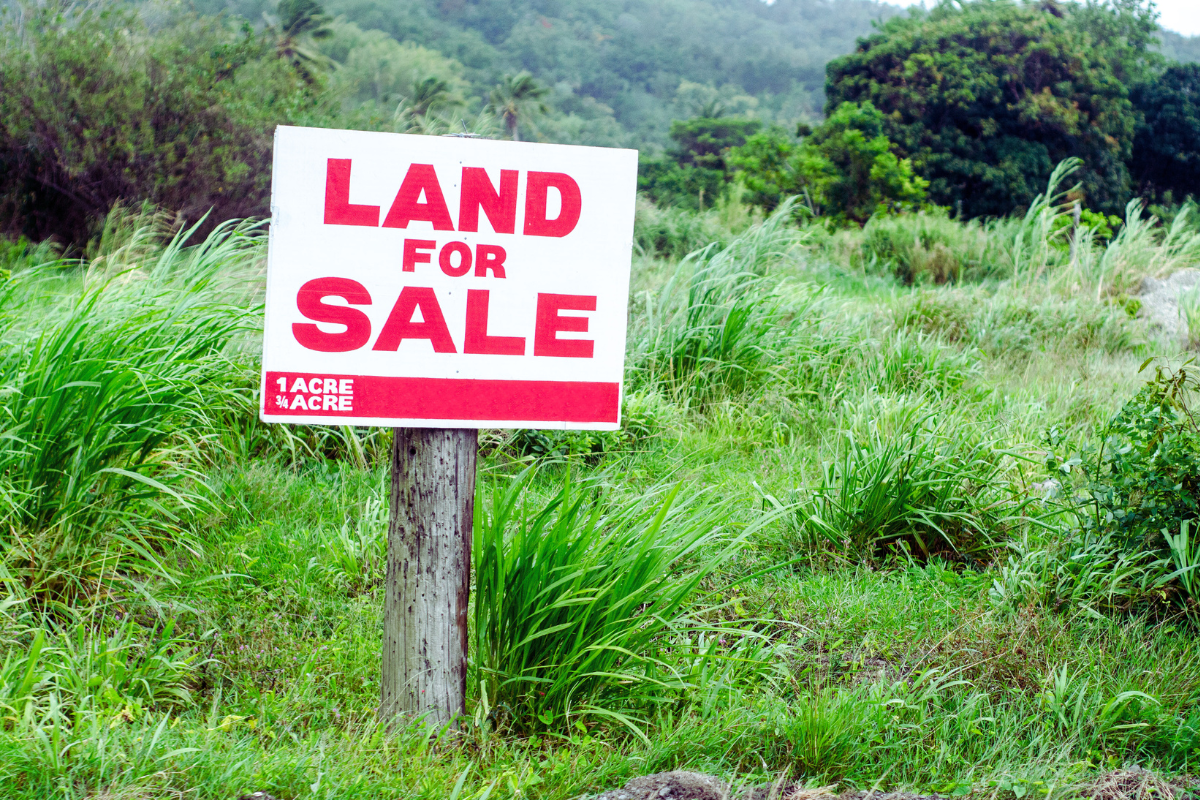
![land for sale sign in a green field, an example of raw land in a post about types of land to invest in]
Land is one of the most overlooked yet potentially lucrative investment opportunities available. But it is not always as simple as buying an empty plot somewhere. There are several types of land to consider, each with its own considerations for potential investors. Let’s discuss the different types of land you can purchase as well as how to find listings and finance your project.
Is Buying Land A Good Investment?
Under the right circumstances, buying land can be a good investment for several reasons:
Appreciation Potential
- Land generally appreciates over time, especially in areas with growing populations or infrastructure development. Unlike buildings, it doesn’t depreciate due to wear and tear.
Limited Supply
- Land is a finite resource, so demand often increases as urban areas expand, making it potentially more valuable over the long term.
Low Maintenance Costs
- Vacant land requires minimal upkeep compared to residential or commercial properties. There are no tenants, repairs, or ongoing management needs.
Flexibility in Usage
- Land offers options for future development (residential, commercial, or agricultural), resale, or even leasing for farming, solar panels, or cell towers.
Tangible Asset
- Unlike stocks or bonds, land is a physical asset you own outright. It isn’t as vulnerable to market volatility in the same way financial securities are.
Potential Drawbacks Of Land Investment
Risks and Drawbacks
Lack of Immediate Cash Flow
- Unlike rental property, land doesn’t typically generate income unless leased for agriculture or other uses.
Taxes and Fees
- You’re responsible for property taxes, insurance (if desired), and possibly zoning or HOA fees, even if the land sits idle.
Zoning Restrictions
- Land use may be limited by local zoning laws or environmental regulations, impacting its future development potential.
Market Liquidity
- Selling land can take longer compared to selling developed property. Its value is highly dependent on location and market demand.
Speculative Nature
- In rural or undeveloped areas, land appreciation may be slow and speculative, requiring patience for a return on investment.
**Types Of Land To Invest In **
Raw Land
Raw land is completely undeveloped property with no infrastructure: no roads, utilities, drainage, or grading. It’s essentially a blank canvas in its natural state. This type of land is often found in rural or remote areas and is typically purchased for agriculture, recreation (like hunting, camping, or off-roading), or as a long-term speculative investment in areas where growth is expected.
Pros:
**Lower Upfront Cost: **Raw land is usually the least expensive of the types of land to purchase per acre since it lacks any improvements or infrastructure.
**Fewer Taxes and Maintenance Expenses: **Property taxes on raw land are often lower due to its undeveloped state, and there’s little ongoing maintenance required.
**Potential for Significant Appreciation: **If the area surrounding the raw land develops (new highways, housing, or commercial projects), the land’s value can rise dramatically, leading to strong returns over time.
Cons:
**Harder to Finance: **Lenders view raw land as riskier since it has no improvements or immediate use. This often means larger down payments (sometimes 50% or more) and higher interest rates, or even needing to buy with cash.
**No Immediate Income Potential: **Unless leased for farming, hunting, or similar uses, raw land won’t generate revenue while you hold it.
Zoning and Development Requirements:** **Turning raw land into a buildable property usually requires rezoning, environmental assessments, utility connections, and road access—all of which can be expensive and time-consuming.
Unimproved Land
Unimproved land is often referred to interchangeably with raw land, but it typically has some minimal access or features, such as being closer to roads or having a nearby utility connection. It’s still largely undeveloped but is generally easier to work with than raw land.
This type of land is suitable for residential building sites, small-scale farming or gardening, community projects, or even park or recreational design.
Pros:
**More Accessible Than Raw Land: **Often located near existing infrastructure, unimproved land may already have basic road access or be closer to towns or utility lines.
**Easier to Develop: **Since it’s closer to existing infrastructure, it’s less costly and faster to prepare for construction compared to completely raw land.
May Qualify for Favorable Zoning:** **In some cases, unimproved land is already zoned for residential or agricultural use, reducing the legal hurdles to development.
Cons:
**Still Requires Investment: **It may need significant work to add water, sewage, electrical lines, and paved roads before it’s buildable or usable.
**Environmental or Utility Assessments: **Soil tests, floodplain studies, or environmental impact assessments are often required before construction approval.
Infrastructure Installation Costs:** **Even with nearby utility connections, the cost to install plumbing, power, and septic systems underground can be substantial.
Improved Land
Improved land has undergone development and is equipped with infrastructure such as paved roads, drainage systems, and connections for utilities like water, gas, and electricity. It may also include grading, cleared plots, and even existing buildings. This land type is ready for construction and ideal for residential or commercial building projects.
Pros:
**Faster ROI (Return on Investment): **Since it’s already prepared for construction, improved land allows investors or builders to start developing immediately, speeding up returns.
Easier to Finance: Traditional lenders are more willing to offer favorable loan terms because improved land poses less risk compared to raw or unimproved land.
Lower Risk: Infrastructure and zoning are already in place, reducing the likelihood of unexpected legal or regulatory hurdles.
Cons:
Higher Cost:** **The convenience of ready-to-build land comes at a premium, often making it the most expensive land type per acre.
Ongoing Taxes and Fees:** **Developed land usually comes with higher property taxes, and if in a planned community, HOA (Homeowners Association) fees may apply.
Less Customization Flexibility:** **Because the land is already prepped with infrastructure and zoning in mind, it can limit your ability to significantly alter its layout or intended use.
Land Loans: What Are My Options?
Financing land is different from financing a traditional home. Here are a few common types of land loans:
Lot Loan: Used to finance the purchase of a parcel that’s intended for future construction but might not be immediately ready to build on. They’re typically found in platted subdivisions or rural developments.
Improved Land Loan: Used for parcels that already have basic infrastructure in place, such as utilities, paved roads, and drainage systems.
Unimproved Land Loan: Apply to land that might have some utility access (water or electricity), but lacks full development.
Vacant Land Loan: Also called raw land loans, these are for vacant land lots that have no improvements or infrastructure.
How To Find Different Types Of Land For Sale Near Me?
There are several ways to find land for sale.
Online real estate platforms
County records and tax sales
Real estate agents who specialize in land transactions
Driving around the area and looking for “For Sale by Owner” signs and unlisted properties can still be found by exploring rural or suburban areas.
Fast Loans For All Types Of Land In Colorado
At Pinetree Financial, we specialize in fast, flexible land loans across Colorado. Whether you’re eyeing raw land in the mountains, an unimproved lot in the suburbs, or a development-ready parcel, we’re here to help you finance your vision. With quick approvals and competitive rates, we make land ownership more accessible. Contact Pinetree Financial today to explore your land loan options.